
Compass
Home GGE Overview Talk to Us
Complete Buyer's Guide

Golden Gate Estates:
What Every Buyer Must Know

A straight-talk guide to purchasing land in the largest rural subdivision in the United States — written by Naples natives who live here, own here, and have personally navigated the permitting process from start to finish.

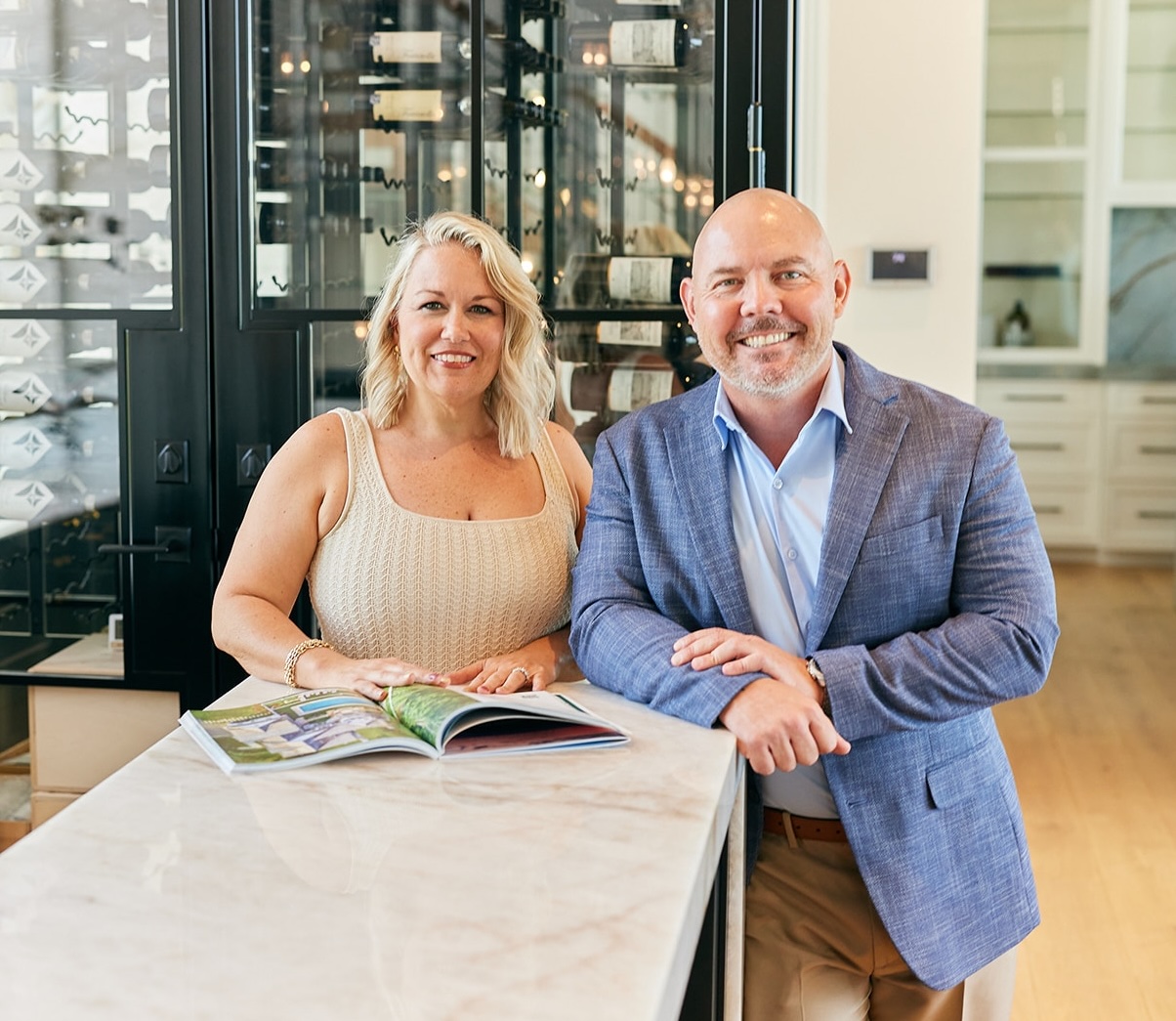
Skip & Michelle Riddle
Skip & Michelle Riddle, REALTORS®
Naples Natives  ·  West Point Graduate  ·  Retired Army Officer
Compass Agents  ·  Golden Gate Estates Homeowners
Introduction

Why I Wrote This Guide

Golden Gate Estates offers something that has become nearly impossible to find in Southwest Florida: privacy, acreage, flexibility, and the freedom to build the life you actually want — without an HOA telling you what color to paint your fence.

But it's also a market that punishes buyers who don't do their homework. Every year, I see people purchase land in GGE assuming all acreage is usable — only to discover after closing that half the property is wetland, or the buildable envelope is smaller than they expected, or the permitting timeline is longer than their builder told them.

I live in Golden Gate Estates. I own land here. I've personally been through the environmental permitting and mitigation process on my own property — not as a spectator, but as the guy writing the checks and waiting on the agency approvals. That experience changed how I advise buyers, and this guide reflects what I wish someone had told me before I started.

Read our story below — how Michelle and I found a suitable lot, navigated Federal, State, and County permitting, and built what we wanted across all five acres, along with every challenge we faced along the way.

Whether you're buying your first piece of land or your fifth, read this before you make an offer.

Before You Read Further

This guide is educational. It covers general principles, common scenarios, and things I've personally experienced. Every property in Golden Gate Estates is different. Environmental conditions, regulatory requirements, and market factors change. Always consult a licensed environmental consultant, attorney, and your real estate professional before making any purchase decision.

Chapter One

The 5 Biggest Mistakes Buyers Make

These aren't hypothetical. I see them happen regularly — and every one of them is preventable with the right guidance before an offer is written.

01
Assuming All Acreage Is Usable
A 5-acre lot is not automatically better than a 2.5-acre lot. Usable, buildable upland is what matters. A smaller lot of clean uplands can be worth significantly more — and far easier to develop — than a larger parcel where half the acreage is wetland.
02
Dismissing — or Ignoring — Wetlands
Both extremes are costly. Buyers who walk away from every wetland lot miss real opportunities. Buyers who ignore wetlands entirely end up facing permitting surprises after closing. The right approach is to understand what the wetlands mean for your specific project.
03
Not Verifying the Buildable Envelope
A lot may look large on paper but have a surprisingly small area where you can actually place structures. Front, rear, and side setbacks — combined with easements, drainage requirements, and driveway placement — can shrink the usable footprint significantly.
04
Confusing Agricultural Zoning with Agricultural Tax Benefits
Agricultural zoning (what you can do with the land) and agricultural tax classification (the Greenbelt exemption that lowers your property taxes) are completely different. Simply owning acreage or keeping a few animals does not automatically qualify a property for agricultural tax treatment.
05
Focusing Only on Purchase Price
The cheapest lot is not always the least expensive property to own and develop. A lower-priced wetland lot with significant mitigation requirements may ultimately cost you more — in time, money, and stress — than a higher-priced uplands lot where you can break ground quickly. Evaluate total development cost, not just purchase price.
Chapter Two

Understanding Uplands vs. Wetlands

The most common misconception in Golden Gate Estates is that wetlands are automatically bad. The reality is far more nuanced — and understanding it can actually give you a competitive advantage as a buyer.

Uplands
  • Typically easier and faster to build on
  • Usually lower permitting costs
  • Less environmental agency review
  • Higher market values per acre
  • Simpler due diligence process
  • Preferred by most lenders and builders
Wetlands
  • Environmentally regulated areas
  • Not automatically unbuildable
  • May require additional permitting
  • Often sell at a discount vs. comparable uplands
  • Can still support homes, pools, driveways
  • May require mitigation for impacts

Why Wetlands Lots Can Be Real Opportunities

Because wetlands lots involve additional permitting and planning, they frequently sell at lower prices than comparable uplands properties. For buyers with flexibility in their timeline and a clear understanding of the process, wetlands lots can provide significant value.

The question isn't: "Can I build on this?"

The question is: "What will it take to build on this, and does that math work for my situation?"

The Key Concept

I've seen buyers walk away from properties that were genuinely outstanding opportunities because they heard the word "wetlands" and stopped listening. I've also seen buyers close on properties without understanding what they were getting into. The goal is knowledge — not fear, and not ignorance.

What Is a Wetland Determination?

Before purchasing a property with potential wetlands, a licensed environmental consultant can perform a wetland delineation — a formal mapping of which portions of the property meet regulatory definitions of wetlands. This tells you precisely how much upland you have and where the wetland boundaries fall.

This is one of the most valuable investments you can make in your due diligence process, and it can save you from significant surprises after closing.

Chapter Three

Wetlands, Mitigation & Permitting

Depending on your property and project, you may encounter review from three levels of government. Understanding who does what — and in what order — helps you plan your timeline and budget realistically.

Federal
U.S. Army Corps of Engineers
Section 404 Permit
(Clean Water Act)
State of Florida
Dept. of Environmental Protection
Environmental Resource Permit (ERP)
Local
Collier County
Building & Site Development Permits

The U.S. Army Corps of Engineers (Section 404)

The USACE regulates impacts to federally protected wetlands under Section 404 of the Clean Water Act. For smaller residential projects, many activities qualify under pre-approved "Nationwide Permits," which are faster than individual permit review. Larger impacts may require a full individual permit process, which is more time-intensive.

Florida DEP — Environmental Resource Permit (ERP)

For most residential development in Golden Gate Estates, the DEP ERP is the primary environmental permit you'll need. The ERP process reviews wetland impacts, stormwater management, drainage, site design, and mitigation requirements. Your environmental consultant guides you through this process and prepares the permit application.

Collier County

County review covers building permits, setbacks, zoning compliance, floodplain requirements, driveways, and site development. County approval does not replace or substitute for state or federal permits — all three may be required simultaneously.

What Is Mitigation?

Mitigation is environmental compensation required when wetlands are impacted by development. When your project — home construction, driveway, pool, accessory structures, septic system — affects wetland areas, regulatory agencies typically require mitigation to offset those impacts.

What Is a Mitigation Bank?

Rather than creating replacement wetlands on-site (which is complex and expensive), most buyers purchase mitigation credits from an approved mitigation bank — a large, preserved wetland system that has been restored and approved to generate environmental credits. The number of credits required is calculated based on the type and size of wetland impacts.

Important: Credit Availability Varies

Mitigation bank credit availability is not guaranteed. Service areas vary by bank, and credit supply can be limited. Your environmental consultant should verify credit availability and pricing early in your due diligence — before you are under contract if possible.

The Typical Permitting Process

1

Hire an Environmental Consultant

A licensed consultant performs a wetland delineation, assesses environmental constraints, and advises on feasibility before you're under contract.

2

Wetland Delineation & Site Assessment

Wetland boundaries are mapped. Upland/wetland ratios are calculated. Potential impacts are identified.

3

Site Plan Development

Working with your consultant and builder, a site plan is developed that minimizes wetland impacts and meets setback requirements.

4

Permit Application Submitted

DEP ERP and/or USACE applications are submitted. Agency review times vary — typically several months for residential projects.

5

Mitigation Calculated & Credits Reserved

Required mitigation is calculated. Credits are reserved at an approved mitigation bank. Availability and cost are confirmed.

6

Permits Issued & Credits Purchased

Once permit conditions are met and credits are purchased, permits are issued and construction can begin.

Chapter Four

Setbacks & Your Buildable Envelope

Setbacks determine exactly where you can build on your property. Understanding them before you purchase — and before you hire a builder — prevents costly surprises during site planning.

Standard GGE Setbacks

For most residential lots in Golden Gate Estates, Collier County requires minimum setbacks from property lines. These create a "buildable envelope" — the area where structures can legally be placed.

— ROAD / FRONT —
▼ FRONT SETBACK: 75 ft
Buildable Envelope
Min 1,000 sq ft structure
Max height 30 ft
▲ REAR SETBACK: 75 ft
— REAR PROPERTY LINE —
Side setbacks: 30 ft each Accessory structure setbacks vary Well: min 75 ft from septic Septic: per FDOH requirements
🌿 Wetland buffer: Additional 25 ft setback required from wetland edge

What This Means for Different Lot Sizes

1.14-Acre Lots

Narrower lots with a smaller buildable footprint. Lower purchase price, but less flexibility for large homes, pools, or accessory buildings. Work with a site planner early to ensure your intended build fits the buildable envelope.

2.25-Acre Lots — The Standard GGE Lot

The traditional Golden Gate Estates lot. Sufficient room for a primary home, pool, detached garage, and often a guest house or workshop, depending on placement. Most buyers and builders are comfortable working with this lot size.

5-Acre Lots and Larger

Maximum flexibility. Room for multiple structures, agricultural uses, horse facilities, RV storage, and future expansion. Larger lots do not automatically mean larger buildable areas — wetlands, easements, and drainage requirements still apply.

Pro Tip

Before making an offer, ask your agent to help you sketch out a basic site plan. Where will the driveway go? Where will the septic be located? Where is the well? Once you've placed those elements — along with setbacks — you'll quickly see the true buildable area of the property.

Chapter Five

Agricultural Zoning vs. Tax Classification

This is one of the most misunderstood topics in Golden Gate Estates — and it costs buyers money when they get it wrong.

Agricultural Zoning: What You Can Do

Golden Gate Estates is zoned for agricultural uses. This means the zoning code permits certain agricultural activities — raising livestock, growing crops, keeping horses, operating a nursery, and more. Agricultural zoning is about permitted uses on the land.

Agricultural Classification (Greenbelt): What It Costs

Agricultural classification — commonly called the Greenbelt exemption — is a property tax benefit administered by the Collier County Property Appraiser's office. When granted, it can dramatically reduce the assessed value of the land for tax purposes.

However, agricultural zoning and agricultural classification are two completely separate things.

Common Misconception

Owning acreage does not automatically qualify for the Greenbelt exemption. Keeping a few horses or chickens does not automatically qualify. Planting a garden does not automatically qualify. The Property Appraiser determines eligibility based on bona fide commercial agricultural use — meaning the land is genuinely being used for commercial agricultural production. Consult the Collier County Property Appraiser's office and your tax advisor for current eligibility requirements.

Examples That May Qualify

  • Commercial nursery or tree farm operations
  • Hay production (documented commercial sales)
  • Commercial livestock operations
  • Beekeeping with documented commercial production
  • Properly documented horse boarding or breeding operations
Chapter Six

Golden Gate Estates Due Diligence Checklist

Before you make an offer on vacant land in Golden Gate Estates, this is what you should know — or be in the process of finding out.

  • Current survey or boundary determination
  • Environmental / wetland review by licensed consultant
  • Wetland delineation if wetlands are present
  • Upland vs. wetland acreage breakdown
  • Zoning verification with Collier County
  • Setback review for intended structures
  • Easement review (drainage, utility, access)
  • Driveway feasibility and permitting requirements
  • Septic system feasibility (soil evaluation)
  • Well feasibility and water table depth
  • Flood zone determination (FEMA map review)
  • Agricultural classification eligibility review
  • Mitigation bank credit availability (if wetlands present)
  • Estimated permitting timeline from consultant
  • Builder consultation for site-specific build costs
  • Fill and clearing cost estimates
  • Total development cost analysis
Don't Wait Until You're Under Contract

Many of these items can and should be explored before you write an offer — or at minimum, during an extended due diligence period that gives you time to get real answers. A brief conversation with an environmental consultant and your builder before making an offer can save you significant time and money.

Chapter Seven

My Personal Experience in Golden Gate Estates

Everything in this guide comes from firsthand experience. Not from a textbook. Not from reading someone else's permit file. From years of navigating the GGE permitting process myself — on my own properties, with my own money — before I ever guided a client through it.
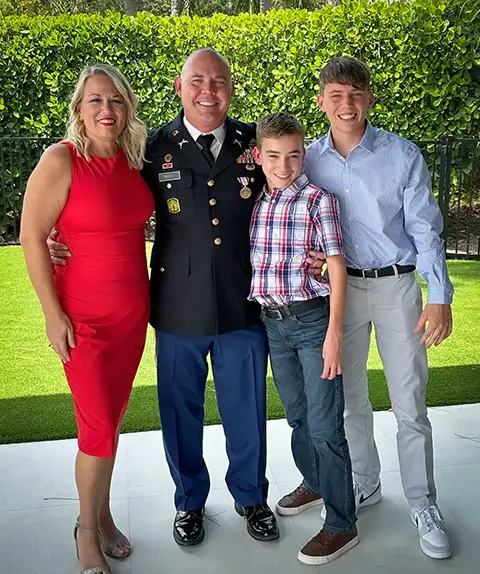
The Riddle Family
"Michelle and I didn't just study this process. We went through it — multiple times, on our own properties, with our own money, and with our family waiting on the outcome."

Act One: 24th Ave NW — Learning the Hard Way (2022)

It started at our existing property on 24th Ave NW. Michelle and I wanted to expand — add a detached in-law suite for family. Straightforward enough, or so I thought. I hired an environmental consulting firm to handle the wetland survey and navigate the state permitting process.

The result? The State denied it. Not because the project was unreasonable. Because our property had already used its approved impact allocation — and because the State's position, laid out in their handbook, is that they are only required to approve impacts for primary residences. Secondary structures — guest houses, in-law suites, detached garages — can be denied. They were denied.

That was a hard lesson. But it's exactly the kind of lesson that changes how you advise other people. We didn't know what we didn't know going in. After that, we did.

Act Two: 22nd Ave NW — The Lot I Didn't Buy (December 2023 – March 2024)

Undeterred, Michelle and I went looking for five acres with enough upland to build what we wanted. In December 2023, we found a promising five-acre lot off 22nd Ave NW.

In March 2024, I filed for a Pre-Application Meeting with the U.S. Army Corps of Engineers — Case SAJ-2024-00631. I had a site plan. I had an environmental consultant. I thought I was ready.

The Corps of Engineers Project Officer reviewed it and gave me honest feedback: the wetland quality on that parcel was relatively high. High-quality wetlands mean more scrutiny, more mitigation requirements, and a harder permitting road. The recommendation — not in any formal capacity, but from someone who knew the process — was to find a lot where the impacts wouldn't be as significant. Low-quality, previously disturbed wetlands are a fundamentally different situation than pristine, high-functioning wetland systems.

We walked away from that lot. One of the better decisions we made in this whole process.

Act Three: 37th Ave NW — The Right Lot, Done Right (2024–Present)

Working informally with the Corps Project Officer's guidance on what to look for, we found two adjacent 2.25-acre lots on 37th Ave NW. The Corps Project Officer did an aerial review and confirmed what we'd hoped: the land was previously disturbed agricultural ground with low-quality wetlands. That distinction matters enormously. Low-quality, previously disturbed wetlands are viewed very differently by the Corps than pristine wetland systems.

We engaged a Southwest Florida environmental consulting firm with deep local permitting experience, and got to work.

Before we ever submitted a permit application, here's what we did to minimize impacts and give the project the best possible chance of approval:

  • Combined the two lots into one project. My in-laws could technically have built their in-law suite on the adjacent lot with a separate driveway — it would have met the County's minimum square footage requirements for a single-family home. But it was one project, so we combined the lots. One application, one cohesive site plan.
  • Moved the main house westward to avoid the willows. The site had a stand of willow trees that I couldn't eliminate entirely, but by shifting the main house west, I was able to leave the majority of them untouched. You minimize what you can.
  • Relocated the detached garage adjacent to the in-law suite. Our original plans — going all the way back to the 22nd Ave pre-application — had the garage in the far northwest corner of the lot. Our environmental consultant and the Corps Project Officer both recommended bringing it closer to the living structures. It changes how you use the space, but it reduces the footprint of development impacts.
  • Placed the in-law suite on previously disturbed, low-impact ground. Our environmental consultant's recommendation — put the structure where the land has already been disturbed. Smart advice.
  • Driveway entrance on the existing dirt path. Not our first choice aesthetically, but it was the least impactful location. When you're in permitting, you don't always get to prioritize aesthetics.
  • Chose off-site mitigation over on-site. We offered to do on-site mitigation — create compensatory wetland areas on the property. The DEP Project Officer didn't support it and wouldn't give meaningful credit for it. So we went off-site, purchasing mitigation credits from an approved mitigation bank. Our environmental consultant helped ensure the site plan had adequate mitigation coverage for the permitted impact area.
The Numbers

I permitted for 1.62 acres of potential wetland impact — which may look aggressive on paper. And when the final tally came in, I ended up mitigating close to 1.5 acres. On a five-acre property, that's a substantial commitment. But actual construction footprint is a fraction of that — I'm not building all over this place. The rest stays untouched. I over-mitigated by design — I wanted coverage, not surprises after the permit was issued. If your plans show maximum potential impact, agencies see a worst-case scenario. Build in buffer.

The process took longer than we would have liked. It required more decisions, more consultants, more patience, and more money than a standard lot purchase and build. But here's what Michelle and I tell every buyer who asks us about GGE: we would do it again. Because the end result — privacy, acreage, the ability to build exactly what we wanted for our family — is something you simply cannot find in a gated community in Naples at any price.

What we learned from going through this ourselves is the reason we can be genuinely useful to buyers navigating it now. We know which questions to ask before you're under contract. We know when a lot looks right but the wetland quality is going to make your life difficult. And we know when a lot that looks complicated is actually a hidden opportunity — because the market hasn't priced in the fact that it's buildable.

That's the conversation Michelle and I want to have with you before you make an offer.

Chapter Eight

Frequently Asked Questions

Often yes, depending on the specific property, the extent of wetland impacts, and the permitting pathway. Many properties with wetlands can still support homes, driveways, pools, and accessory structures. The key is understanding the permitting requirements, mitigation costs, and timeline before purchasing.
Mitigation is environmental compensation required when wetlands are impacted by development. The most common form is purchasing credits from an approved mitigation bank. Costs vary based on the type and area of wetlands impacted, the mitigation bank's service area, and current credit pricing. Your environmental consultant provides a site-specific estimate based on your actual proposed impacts.
Timelines vary based on the complexity of the project, agency workload, and whether the project qualifies for expedited review pathways. Residential projects through DEP ERP can range from several months for straightforward applications to significantly longer for complex projects. A licensed environmental consultant can provide a realistic timeline estimate based on your specific property and proposed development.
A Section 404 permit is federal authorization from the U.S. Army Corps of Engineers to impact federally regulated wetlands and waterways. Many smaller residential projects qualify under pre-approved Nationwide Permits, which are faster than individual review. Whether you need federal authorization depends on your specific project and property — your environmental consultant determines this early in the process.
Generally yes. Golden Gate Estates is agriculturally zoned, and most lots support equestrian use. Specific requirements — fencing, pasture area, structures — depend on the property and the number of animals. Consult Collier County for current requirements related to your specific situation.
Often yes, depending on the lot size, zoning specifics, setbacks, and septic system capacity. Guest houses and accessory structures are one of the most attractive features of GGE ownership. Verify with Collier County and discuss your specific project with a builder familiar with GGE requirements.
The Greenbelt or agricultural classification is a property tax benefit that can significantly reduce assessed land value. Eligibility requires bona fide commercial agricultural use as determined by the Collier County Property Appraiser. Simply owning acreage is not sufficient. Consult the Property Appraiser's office and a tax advisor for current requirements.
Strongly recommended. A current boundary survey confirms the property lines, identifies easements, and provides the foundation for any site planning. For land with potential wetlands, a survey combined with a wetland delineation gives you a complete picture of what you're purchasing.

Continue Reading — It's Free

You're 2 seconds away from the full guide.

Enter your info and the rest unlocks instantly — including Skip's personal permitting story, the due diligence checklist, and the full FAQ.

Your information is never shared or sold. We personally review every inquiry.

✓ You're in.

Scroll up to continue reading — all chapters are now unlocked.

Talk to Us Before You Make an Offer.

A brief conversation today can help you identify potential issues — wetlands, mitigation, setbacks, buildability, agricultural classification, access — before they become expensive surprises after closing.

Got it — we'll be in touch shortly.

We personally review every message and typically respond within a few hours.

Important Disclaimers

This guide is provided for general informational and educational purposes only. It does not constitute legal, environmental, engineering, tax, or professional advice. Every property in Golden Gate Estates is unique, and conditions, regulations, and requirements vary significantly by parcel. Readers should conduct independent due diligence and consult licensed professionals — including environmental consultants, attorneys, engineers, and tax advisors — before making any real estate purchasing decision.

Permitting: Skip and Michelle Riddle, R Collective | Bowers Group, and Compass Florida LLC cannot guarantee approval of any permit application by the U.S. Army Corps of Engineers (Section 404), the Florida Department of Environmental Protection (Environmental Resource Permit), Collier County, or any other regulatory agency. Permit approvals are determined solely by the applicable regulatory agencies based on the facts, law, and policy applicable at the time of review. Conditions of approval, permit requirements, and agency interpretations may change.

Mitigation: Mitigation bank credit availability, pricing, and service area coverage cannot be guaranteed and may change. Mitigation requirements are determined by regulatory agencies and are subject to change. Buyers should verify current credit availability with a licensed environmental consultant before closing.

Timelines: Environmental permitting timelines cannot be predicted with certainty. Agency review periods vary based on project complexity, agency workload, completeness of applications, and other factors outside the control of the applicant or their representatives.

Agricultural Classification: Eligibility for agricultural tax classification (Greenbelt) is determined solely by the Collier County Property Appraiser and is subject to Florida law and current appraiser guidelines. No representation is made regarding eligibility for any particular property or use.

Skip Riddle and Michelle Riddle are licensed REALTORS® with R Collective, part of the Bowers Group — a licensed real estate team operating under Compass Florida LLC, DBA Compass (License #CQ1049215), a licensed Florida real estate broker. Skip Riddle Lic. #SL3502560 · Michelle Riddle Lic. #SL3430442. Equal Housing Opportunity. All information herein is deemed reliable but not guaranteed. © 2026 R Collective. All rights reserved.

Skip & Michelle Riddle · Compass Naples